In a Hurry? Key Takeaways
Build a repeatable client pipeline by choosing a niche, creating relevant proof, finding businesses with visible video demand, and following up with a specific offer.
A clear niche and outcome-based offer
Format-specific proof rather than a general showreel
A qualified prospect list with a reason to contact each person
A paid-pilot scope and revision policy
Scale Your Video Editing Agency With Zero Chaos
Manage freelance editors, streamline revisions, protect clients with two-lane masked messaging, and retain 100% of your earnings. No hidden fees, no marketplace middleman cuts.
Start with a market, not a platform
Client acquisition becomes easier when your offer names a buyer, a recurring video problem, and a useful outcome. ‘I edit videos’ forces the prospect to design the engagement. ‘I turn weekly coaching calls into one YouTube episode and six short clips’ gives them something concrete to evaluate.
Choose one segment for the next thirty days: YouTube educators, podcasts, wedding studios, real-estate teams, ecommerce brands, or agencies with overflow. Study how that segment publishes, what slows it down, and which proof would reduce the risk of hiring you.
Build a weekly acquisition loop
Create a prospect list from public evidence of demand: active channels, inconsistent uploads, weak repurposing, hiring posts, or agencies showing more client work than their team can comfortably deliver. Record the decision-maker, recent content, observed opportunity, outreach date, reply, and next follow-up.
Send a small number of researched messages every day. Lead with the relevant observation, show one matching example, propose a narrow improvement, and ask for a low-friction next step. Follow up with additional value instead of writing ‘just checking in.’
- Publish two or three format-specific samples with a short explanation of the brief and decisions.
- Contact businesses that are already investing in video, not businesses you must first convince to use video.
- Offer a paid pilot with defined footage, deliverables, deadline, and revision limit.
- Ask every satisfied client for a referral, testimonial, and permission to write a compact case study.
Turn projects into predictable revenue
The first project proves editing skill; the second proves reliability. After a successful delivery, review the client’s publishing calendar and propose a monthly package tied to real output, such as four episodes, twelve shorts, or campaign variants. Define the capacity and review process before offering a retainer.
Track which niche, message, sample, and offer produced replies and paid work. Double down on evidence, not on the platform that feels busiest. A simple pipeline measured every week is more useful than endlessly changing portfolio styles.
What To Check Before You Decide
- A clear niche and outcome-based offer
- Format-specific proof rather than a general showreel
- A qualified prospect list with a reason to contact each person
- A paid-pilot scope and revision policy
- A weekly scorecard for messages, replies, calls, pilots, and retained clients
Comparison Table
| Option | Best for | Tradeoff | Gigxomi angle |
|---|---|---|---|
| Warm referrals | Fast trust and higher close rates | Limited volume | Keep client history and follow-ups connected to delivery. |
| Direct outreach | Choosing a specific niche and offer | Requires research and consistency | Move qualified conversations into a structured client workflow. |
| Content and inbound | Long-term authority | Slower feedback loop | Turn inbound enquiries into briefs, projects, and assigned work. |
Action Steps for how to get video editing clients
- Choose one client segment and one recurring deliverable for a 30-day campaign.
- Create or reorganize three samples so each one matches that segment’s content format.
- Build a list of 50 qualified prospects using visible publishing or hiring signals.
- Send personalized outreach daily, follow up twice, and record outcomes in one pipeline.
- Convert a successful paid pilot into a clearly scoped monthly package.
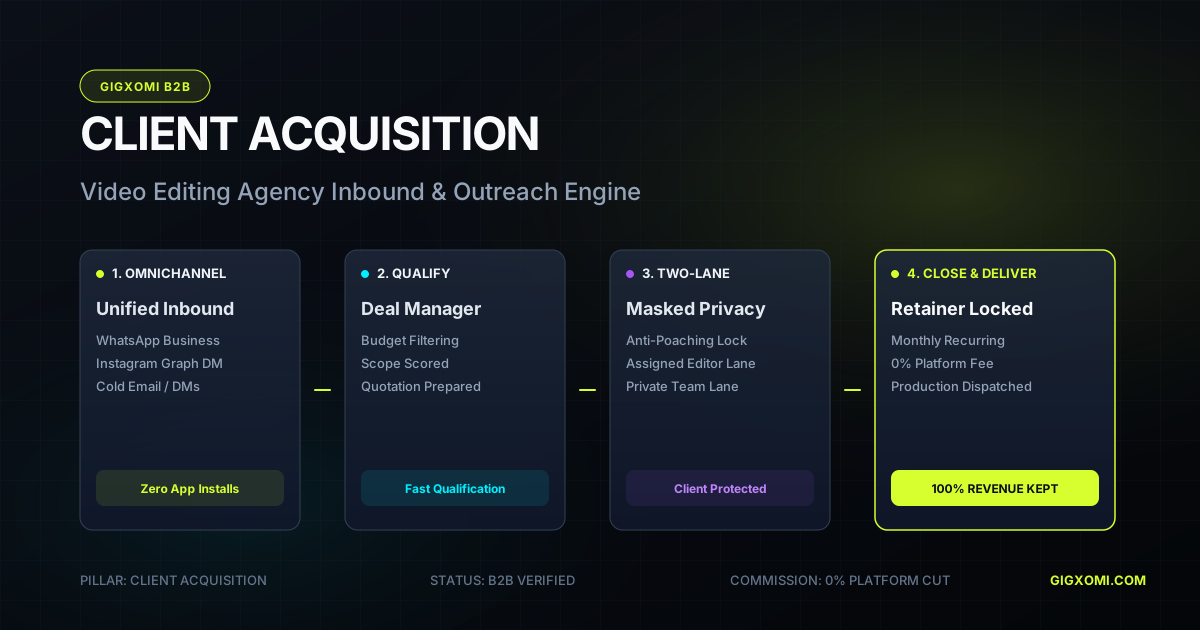
The Video Editing Agency Delivery Engine
How modern studios scale client capacity without founder micro-management or poaching risk:
Omnichannel Inbound
WhatsApp & Instagram DM leads arrive in Unified Inbox
Qualification & Quote
Manager scores scope, prices deal & sends quote link
Two-Lane Masked Chat
Editor receives brief; client phone is 100% encrypted
Review & Approval
Client approves rough cut with gated revision limits
0% Commission Payout
Agency keeps 100% of fees; auto-renewal locked
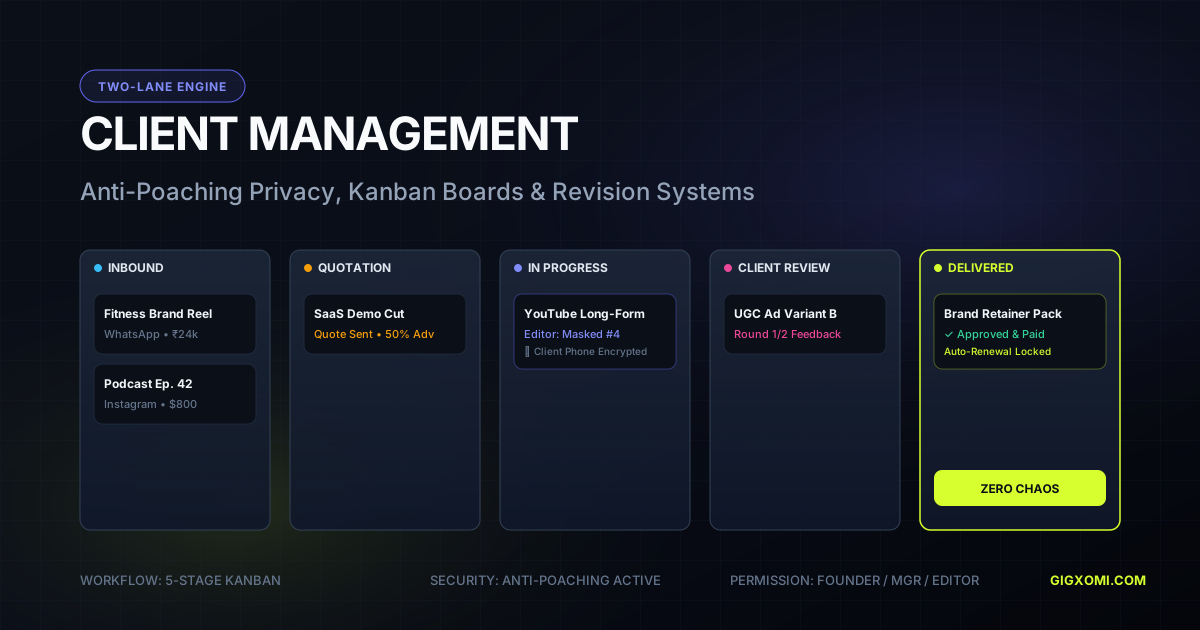
Anti-Poaching Guarantee: Editors never see raw client phone numbers or direct payment links. All communication is relayed via encrypted tokens, protecting your agency's client equity permanently.
Put the Process Into Practice
Gigxomi helps video-editing agencies and studio owners keep client context, manager delegation, editor assignments, reviews, delivery, and payout visibility connected. Use this guide to structure your process; use the workspace when that process requires shared ownership and a reliable operating record.
You can also read our in-depth video editing agency management software guide, or review agency workspace pricing.
Continue Your Plan
Scale on Gigxomi Agency Workspace
Stop client poaching with Two-Lane masked chat, keep 100% of client retainers with 0% platform commission, and get direct onboarding from our WhatsApp concierge (+91 99933 28124).
Frequently Asked Questions
Where should a video editor look for clients?
Start where your chosen buyers already publish or discuss work: YouTube, Instagram, LinkedIn, industry communities, agency directories, events, and referrals. The quality of your targeting matters more than using every platform.
Should a beginner work for free?
Create self-initiated samples or offer a tightly scoped paid pilot. Unbounded free work often attracts poor-fit buyers and gives neither side a realistic test of the working relationship.
How many outreach messages should I send?
Use a volume you can research and follow up properly. Ten relevant messages are more informative than one hundred generic messages because you can learn which observation, proof, and offer produced replies.
Related Guides
Explore more agency scaling blueprints, client acquisition systems, and software comparisons.
How to Get Your First Video Editing Client
Get the first paid client by narrowing your offer, producing one relevant proof piece, contacting warm and well-researched prospects, and selling a small paid pilot.
Video Editor Cold DM Template With Examples
A good video-editor cold DM proves relevance in a few lines: specific observation, useful outcome, matched evidence, and one simple question—without fake familiarity or a hard sell.
How to Manage Video Editing Clients Without Chaos
Manage editing clients with a visible lifecycle: qualification, scoped onboarding, asset intake, milestones, consolidated review, approval, delivery, payment, and retention.
How to Get Video Editing Clients as a Beginner
A beginner can compete through focus, reliable fundamentals, honest samples, fast communication, and a paid pilot that is small enough to deliver exceptionally well.
How to Get Video Editing Clients in India
Find Indian clients through niche communities, local business networks, creator ecosystems, production partners, and outreach that reflects regional language and payment realities.
How to Get International Video Editing Clients
Win international work by showing market-specific proof, reducing communication risk, handling time zones and payments professionally, and starting with a tightly scoped pilot.
How to Get Video Editing Clients on Instagram
Use Instagram as a prospecting database: specialize your profile, find accounts with an active publishing need, start relevant conversations, and move qualified leads into a paid pilot.
How to Get Video Editing Clients on LinkedIn
Find LinkedIn clients by targeting roles that own video outcomes, publishing decision-useful proof, and opening business conversations around a specific content bottleneck.