In a Hurry? Key Takeaways
Set a sustainable video-editing price from your cost floor, the work’s complexity and risk, the client’s required service level, and a clearly defined scope—not a universal rate card.
Financial floor
Raw footage and final runtime
Editing and graphics complexity
Reviewers and revision rounds
Scale Your Video Editing Agency With Zero Chaos
Manage freelance editors, streamline revisions, protect clients with two-lane masked messaging, and retain 100% of your earnings. No hidden fees, no marketplace middleman cuts.
Calculate the floor you cannot negotiate below
Add the income you need, taxes, software, equipment, storage, insurance, payment fees, non-billable sales and admin time, and a reinvestment buffer. Divide by realistic billable hours—not every hour in the month. This produces an internal hourly floor even if the client receives a project price.
Estimate the full workload: ingest, organization, edit passes, graphics, audio, captions, review calls, revisions, exports, uploads, and archive. Multiply by the floor and add uncertainty where the brief or footage is incomplete.
Choose a pricing unit that matches uncertainty
Hourly pricing works when scope is exploratory or the client directs the process. A project fee gives the buyer certainty when deliverables and review limits are known. A retainer reserves recurring capacity and should specify volume, turnaround, rollover, and out-of-scope work.
Value affects the ceiling, but it does not remove the need for scope. A launch campaign with multiple stakeholders carries more commercial and coordination risk than a personal clip, even when both have the same final duration.
Quote assumptions, not just a number
Write what is included: source-footage limit, runtime, formats, captions, graphics, music licensing, review rounds, turnaround, delivery files, and payment schedule. State the rate or change-order process for extra versions and late scope changes.
Offer options only when they represent meaningful service levels. A basic edit, a branded edit, and a repurposing package help a buyer choose; three arbitrary prices with hidden differences create confusion.
What To Check Before You Decide
- Financial floor
- Raw footage and final runtime
- Editing and graphics complexity
- Reviewers and revision rounds
- Deadline, versions, storage, and licensing
Comparison Table
| Option | Best for | Tradeoff | Gigxomi angle |
|---|---|---|---|
| Hourly | Uncertain or client-directed scope | Buyer has less cost certainty | Record time and scope changes against the project. |
| Project fee | Defined deliverables | Underestimation reduces margin | Keep brief, milestones, review, and payment aligned. |
| Retainer | Recurring predictable demand | Capacity and rollover rules must be explicit | Plan recurring assignments and delivery visibility. |
Action Steps for how much should I charge for video editing
- Calculate a realistic internal hourly floor.
- Estimate every production and coordination task.
- Choose hourly, project, or retainer pricing based on scope certainty.
- Write inclusions, exclusions, review limits, and payment timing.
- Compare estimated and actual effort after delivery and update future quotes.
The Video Editing Agency Delivery Engine
How modern studios scale client capacity without founder micro-management or poaching risk:
Omnichannel Inbound
WhatsApp & Instagram DM leads arrive in Unified Inbox
Qualification & Quote
Manager scores scope, prices deal & sends quote link
Two-Lane Masked Chat
Editor receives brief; client phone is 100% encrypted
Review & Approval
Client approves rough cut with gated revision limits
0% Commission Payout
Agency keeps 100% of fees; auto-renewal locked
Anti-Poaching Guarantee: Editors never see raw client phone numbers or direct payment links. All communication is relayed via encrypted tokens, protecting your agency's client equity permanently.
Put the Process Into Practice
Gigxomi helps video-editing agencies and studio owners keep client context, manager delegation, editor assignments, reviews, delivery, and payout visibility connected. Use this guide to structure your process; use the workspace when that process requires shared ownership and a reliable operating record.
You can also read our in-depth video editing agency management software guide, or review agency workspace pricing.
Continue Your Plan
Price for High Agency Margins with 0% Fees
Stop losing 10-20% to marketplaces: keep 100% of billings with 0% commission, prevent client poaching with Two-Lane masked chat, and get customized pricing setup via WhatsApp concierge (+91 99933 28124).
Frequently Asked Questions
Should beginners charge less for video editing?
A beginner may price for a smaller proof base or slower workflow, but the rate must still cover costs and scope. Reduce risk with a small paid project rather than unsustainable pricing.
Should revisions cost extra?
Include a defined number or type of review rounds. Charge for additional rounds or changes that alter the approved brief, and explain the mechanism before work begins.
Can I charge by finished minute?
Only when the format and input are standardized. A finished minute can require very different effort depending on footage, story, graphics, sound, and review complexity.
Related Guides
Explore more agency scaling blueprints, client acquisition systems, and software comparisons.
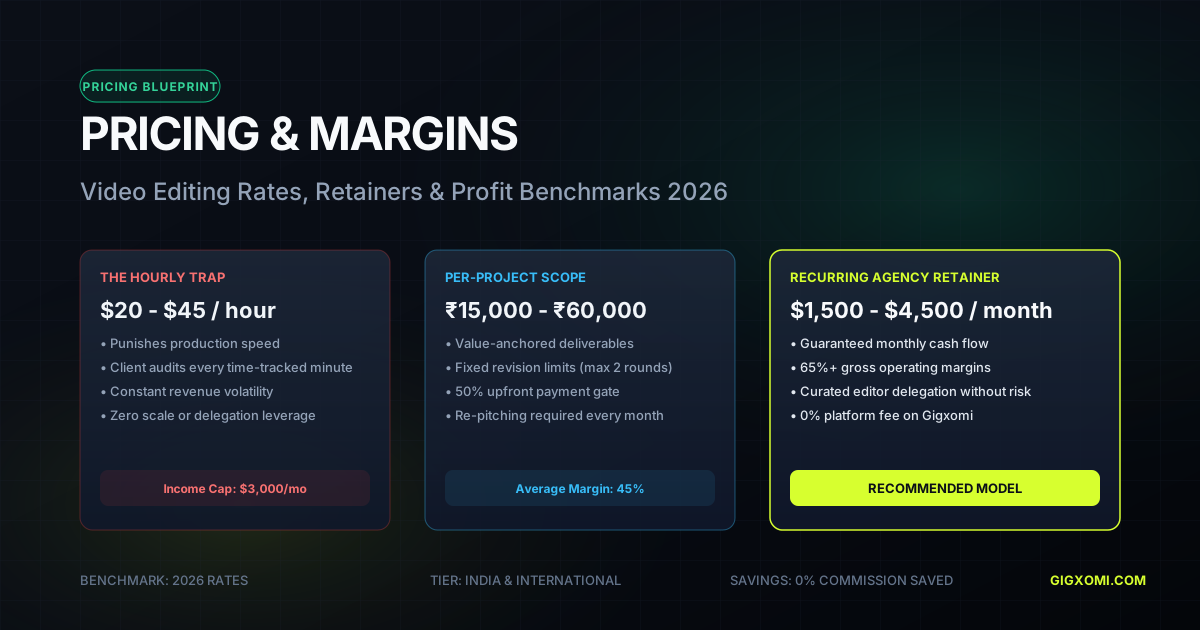
Video Editing Rates in India: How to Build Your Price
There is no single correct Indian video-editing rate. Build a defensible quote from your costs, format complexity, client market, turnaround, revisions, taxes, and payment risk.
Video Editing Proposal Template: Scope Work Clearly
A strong video-editing proposal connects the client’s goal to exact deliverables, workflow, schedule, review limits, price, rights, and acceptance terms.
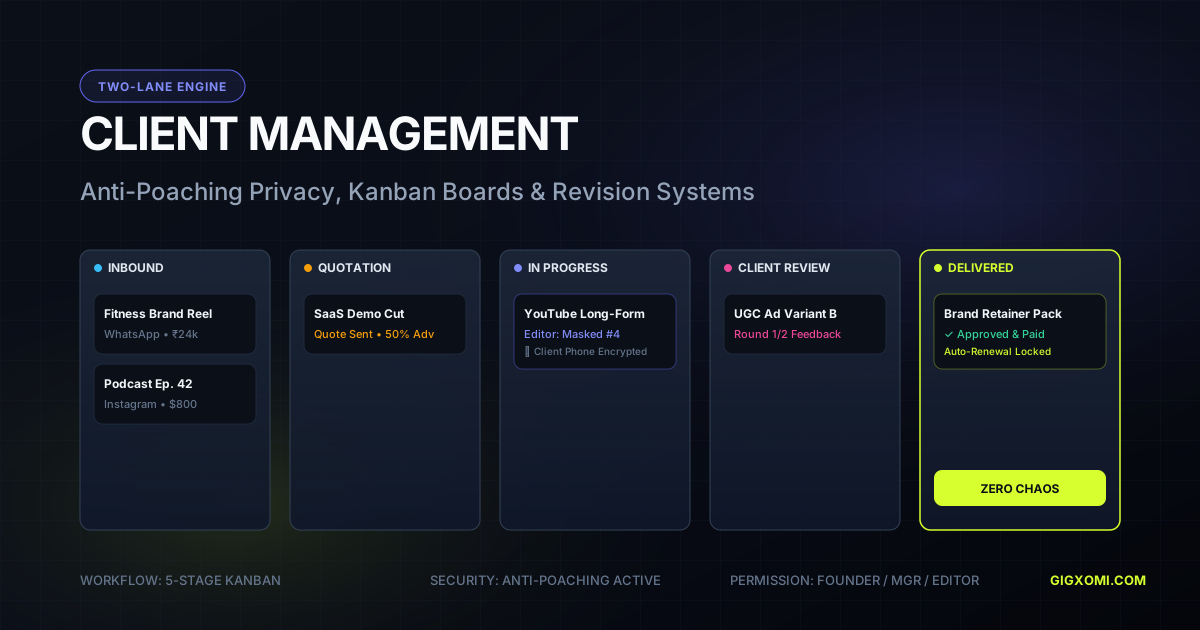
How to Manage Video Editing Clients Without Chaos
Manage editing clients with a visible lifecycle: qualification, scoped onboarding, asset intake, milestones, consolidated review, approval, delivery, payment, and retention.
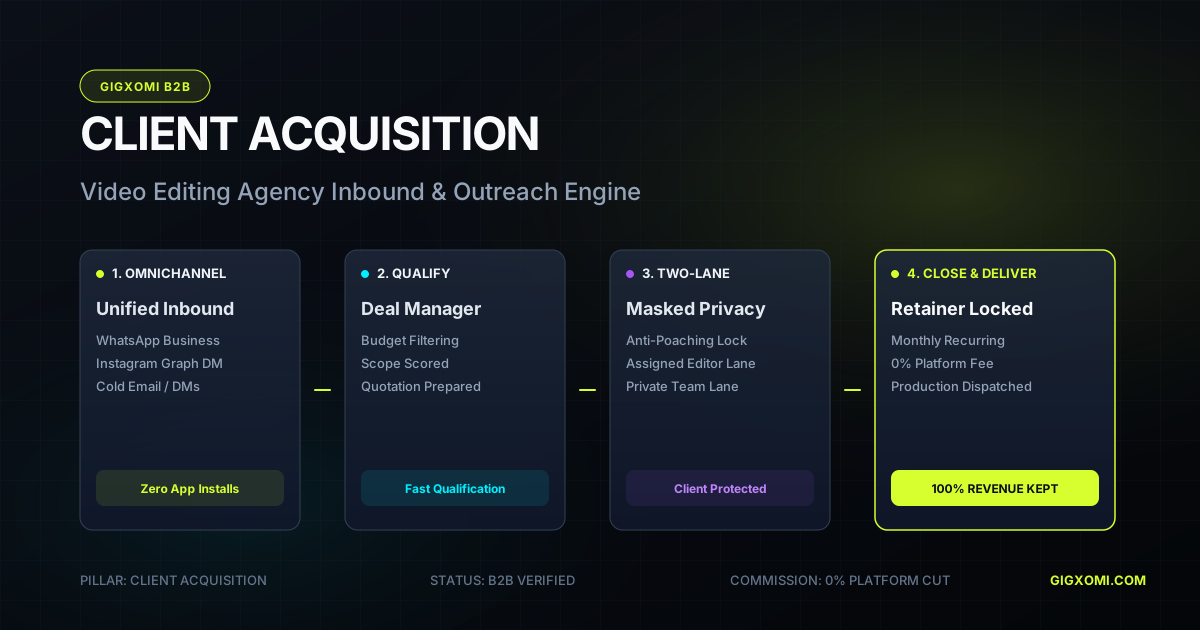
How to Get Video Editing Clients: A Repeatable System
Build a repeatable client pipeline by choosing a niche, creating relevant proof, finding businesses with visible video demand, and following up with a specific offer.
How to Get Your First Video Editing Client
Get the first paid client by narrowing your offer, producing one relevant proof piece, contacting warm and well-researched prospects, and selling a small paid pilot.
How to Get Video Editing Clients as a Beginner
A beginner can compete through focus, reliable fundamentals, honest samples, fast communication, and a paid pilot that is small enough to deliver exceptionally well.
How to Get Video Editing Clients in India
Find Indian clients through niche communities, local business networks, creator ecosystems, production partners, and outreach that reflects regional language and payment realities.
How to Get International Video Editing Clients
Win international work by showing market-specific proof, reducing communication risk, handling time zones and payments professionally, and starting with a tightly scoped pilot.