In a Hurry? Key Takeaways
Scale an editing business by choosing the current constraint, protecting contribution margin and quality, building repeatable acquisition and delivery, and adding the right capacity at the right time.
Qualified demand by segment
Contribution margin by service
Documented workflow ownership
Skill-based capacity forecast
Scale Your Video Editing Agency With Zero Chaos
Manage freelance editors, streamline revisions, protect clients with two-lane masked messaging, and retain 100% of your earnings. No hidden fees, no marketplace middleman cuts.
Find the constraint before adding volume
Growth can be blocked by insufficient qualified demand, poor conversion, underpricing, founder-only knowledge, editor capacity, review delays, client approvals, or cash timing. Measure the path from lead to paid delivery and identify the stage that actually limits throughput.
More leads will not fix negative contribution margin, and more editors will not fix unclear briefs. Set a target for one constraint and protect quality while testing the change.
Standardize the repeatable 80 percent
Create templates and ownership for qualification, proposals, onboarding, briefs, file intake, assignment, review, client communication, delivery, invoice, and archive. Keep creative judgment flexible while removing preventable coordination decisions.
Build a capacity model by skill, not headcount alone. Forecast contracted work, likely pipeline, deadlines, reviewer load, absences, and buffer. A motion designer and a talking-head editor do not represent interchangeable hours.
Scale economics and resilience together
Track revenue, gross and contribution margin, rework, on-time delivery, first-pass acceptance, utilization, sales cycle, retention, receivables, and client concentration. Use trends by format and client segment; company-wide averages can hide an unprofitable service.
Maintain cash reserves, backup delivery capacity, documented access, and a recovery plan. Reduce dependence on one client, one rainmaker, one reviewer, or one editor before that dependency becomes an emergency.
What To Check Before You Decide
- Qualified demand by segment
- Contribution margin by service
- Documented workflow ownership
- Skill-based capacity forecast
- Quality, cash, and concentration controls
Comparison Table
| Option | Best for | Tradeoff | Gigxomi angle |
|---|---|---|---|
| Raise prices or narrow scope | Demand exceeds profitable capacity | Some prospects will not fit | Use workload and client data to choose intentionally. |
| Add freelance bench | Variable or specialized demand | Coordination and availability risk | Maintain profiles, assignments, review, and payout visibility. |
| Hire operations lead | Founder is the delivery bottleneck | Needs authority, process, and sufficient margin | Give managers a shared client and production view. |
Action Steps for how to scale a video editing business
- Map lead-to-cash stages and identify the current constraint.
- Measure margin and rework by service line.
- Document the repeatable workflow and assign decision owners.
- Forecast capacity by skill and deadline before hiring.
- Reduce client, staff, cash-flow, and platform concentration risk.
The Video Editing Agency Delivery Engine
How modern studios scale client capacity without founder micro-management or poaching risk:
Omnichannel Inbound
WhatsApp & Instagram DM leads arrive in Unified Inbox
Qualification & Quote
Manager scores scope, prices deal & sends quote link
Two-Lane Masked Chat
Editor receives brief; client phone is 100% encrypted
Review & Approval
Client approves rough cut with gated revision limits
0% Commission Payout
Agency keeps 100% of fees; auto-renewal locked
Anti-Poaching Guarantee: Editors never see raw client phone numbers or direct payment links. All communication is relayed via encrypted tokens, protecting your agency's client equity permanently.
Put the Process Into Practice
Gigxomi helps video-editing agencies and studio owners keep client context, manager delegation, editor assignments, reviews, delivery, and payout visibility connected. Use this guide to structure your process; use the workspace when that process requires shared ownership and a reliable operating record.
You can also read our in-depth video editing agency management software guide, or review agency workspace pricing.
Continue Your Plan
Scale Agency Retainers with Complete Security
Scale multi-editor output without poaching risk: Two-Lane masked communication protects accounts, 0% platform commission maximizes profit, and our WhatsApp concierge (+91 99933 28124) helps configure your workspace.
Frequently Asked Questions
When is a video editing business ready to scale?
When demand, pricing, delivery quality, unit economics, and cash flow are sufficiently repeatable that added capacity solves a measured constraint rather than amplifying disorder.
What should an editing agency automate first?
Automate stable, low-judgment handoffs such as reminders, intake checks, status updates, and reporting. Do not automate a broken process or remove human review from creative and client-risk decisions.
How do I scale without losing quality?
Define the quality bar, use matched hiring and paid tests, review early, measure revision causes, coach against real examples, and retain clear final accountability.
Related Guides
Explore more agency scaling blueprints, client acquisition systems, and software comparisons.
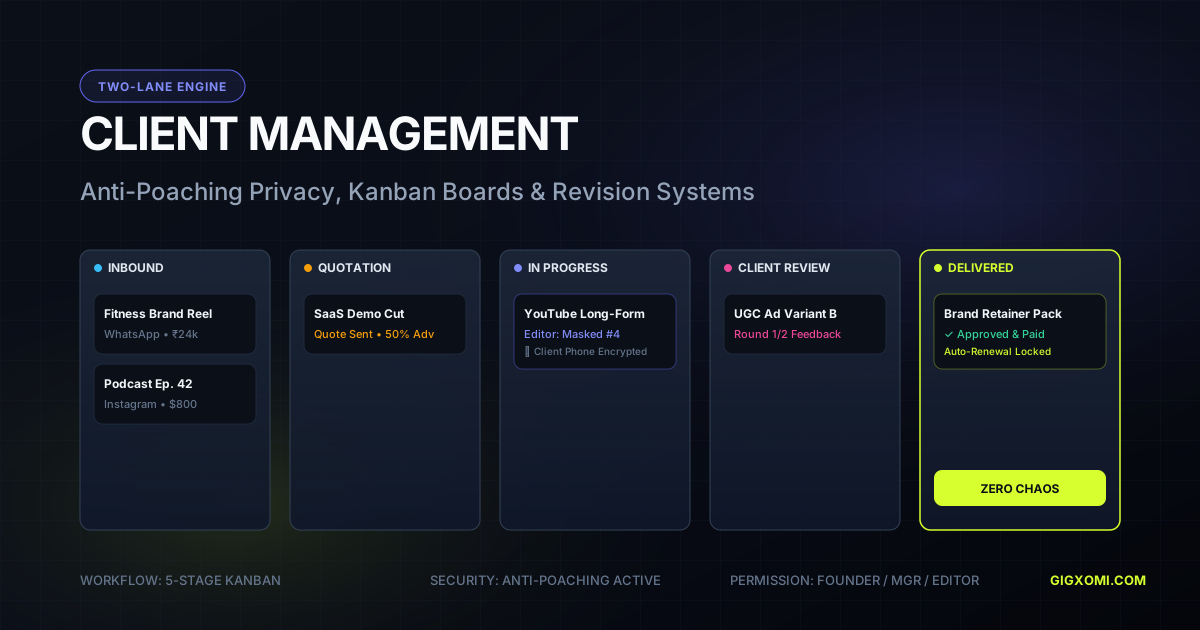
Video Editing Agency Management Software & Systems: How to Build Your Team and Manage Editors
The comprehensive blueprint for lead video editors scaling into an agency: how to manage freelance editors, structure two-lane masked communication, build a vetted team, stop client poaching, and maintain 60%+ profit margins.
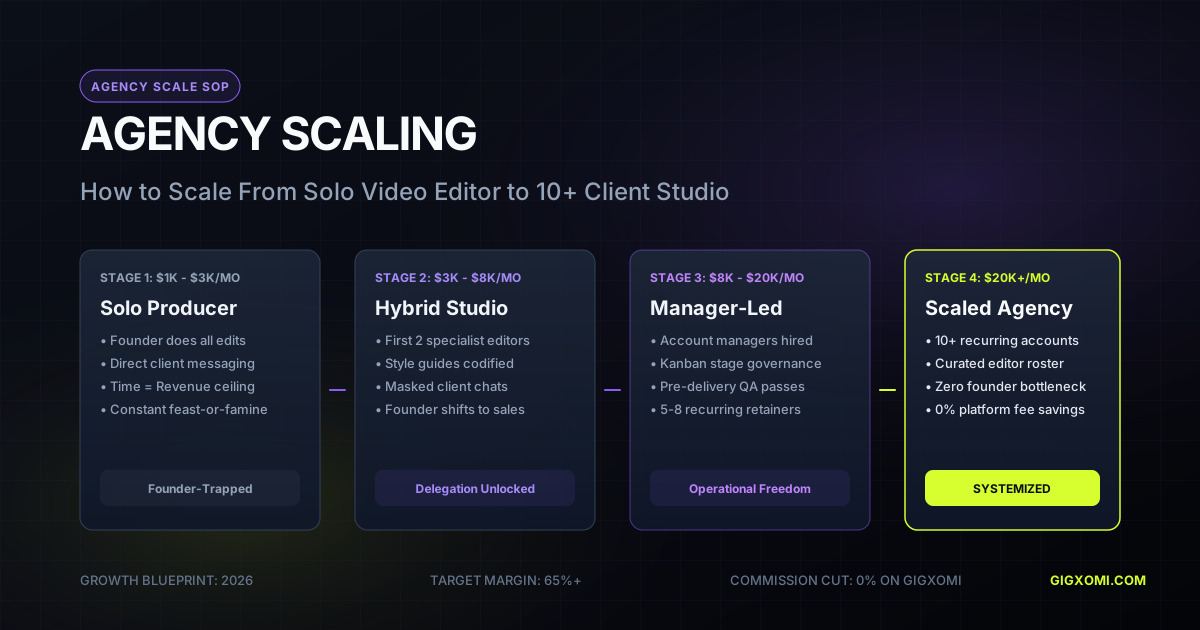
How to Start a Video Editing Agency Step by Step
Start a video-editing agency by proving one focused offer, pricing the full delivery cost, standardizing sales and production, adding capacity carefully, and protecting cash flow.
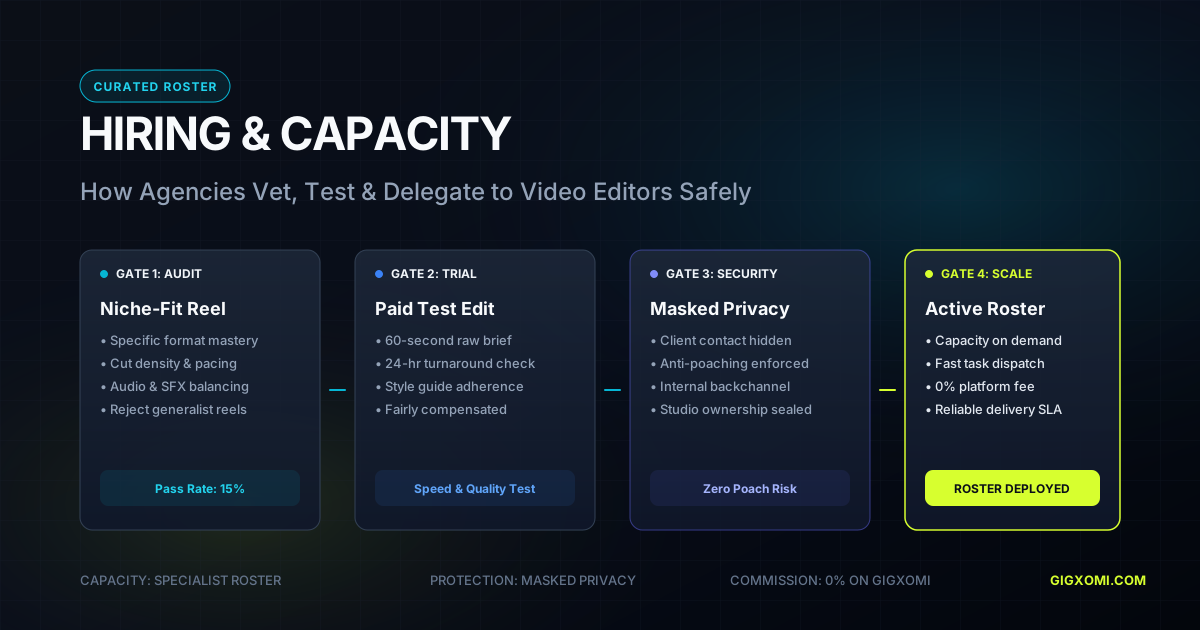
How to Outsource Video Editing Without Losing Quality
Outsource editing by standardizing the brief, choosing the correct delivery model, running a paid test, controlling files and feedback, and measuring quality and margin.
CRM for Video Editors: What to Track and Why
A useful CRM for video editors tracks relationships and revenue decisions—not just contacts—including source, fit, offer, next action, proposal, project history, and retention opportunity.
How to Hire Video Editors: A Practical Hiring Scorecard
Hire editors by defining the real role, sourcing format-matched candidates, using a fair paid work sample, checking operating fit, and onboarding against measurable quality standards.

Video Editor Contract Template for Agencies: Anti-Poaching & Subcontractor Agreement
Post-production agency margins depend on enforceable subcontractor contracts. Protect your roster against direct client poaching, secure project IP transfers upon payment settlement, define clear footage boundaries, and structure milestone kill fees.
Multi-Editor Revision Management: How Post-Production Agencies Prevent Chaos
Managing multiple editors across client revisions requires strict quality gates. Learn how post-production agencies prevent version confusion, eliminate conflicting stakeholder feedback, and preserve creative margins.
A Complete Guide To Building A Video Editing Business From Home To Hire Your First Editor
Building a video editing business from home follows a predictable sequence: nail one offer, land three recurring clients, build a delivery system, then hire the first editor. Skipping any stage creates a fragile operation that collapses under scale.