In a Hurry? Key Takeaways
A practical editing funnel moves a qualified prospect through one clear decision at a time: relevant message, useful conversation, scoped paid pilot, reliable delivery, and a justified recurring offer.
Objective stage definitions
Lead owner and next-action date
Source and offer attribution
Adjacent-stage conversion rates
Scale Your Video Editing Agency With Zero Chaos
Manage freelance editors, streamline revisions, protect clients with two-lane masked messaging, and retain 100% of your earnings. No hidden fees, no marketplace middleman cuts.
Define stages that reflect buyer decisions
Use stages you can observe and act on: qualified, contacted, replied, discovery scheduled, proposal sent, paid pilot agreed, delivered, and recurring. Avoid vague labels such as warm or interested unless the label has a written definition and next action.
Every open lead needs an owner, last contact, next action, and date. The funnel is not a collection of names; it is a record of decisions. Close or recycle stalled leads rather than carrying an inflated pipeline that hides how little qualified work is progressing.
Work backwards from capacity and revenue
Estimate how many recurring clients your available editing and review capacity can serve. Then use your own conversion rates to calculate the conversations and qualified prospects required. For example, if one in four qualified calls becomes a paid pilot and half of successful pilots become monthly clients, two new retainers require about four successful pilots and sixteen qualified calls—not a random message quota.
Until you have enough history, use conservative assumptions and update them monthly. Separate sources and offers because referral calls, marketplace leads, and cold outreach rarely convert the same way. Capacity matters too: acquiring work you cannot deliver damages both margin and trust.
- Track conversion between adjacent stages rather than only total messages and total clients.
- Measure the number of days spent in each stage to expose slow follow-up and approval delays.
- Forecast delivery capacity before increasing outreach or accepting recurring volume.
Improve one constraint at a time
If qualified prospects do not reply, improve relevance, proof, and contact timing. If discovery calls do not produce pilots, review qualification, diagnosis, scope, and price explanation. If pilots do not renew, inspect onboarding, feedback ownership, revisions, delivery, and whether the recurring offer solves a continuing need.
Review the funnel weekly using counts, rates, aging, and a small sample of real conversations. Choose one constraint and one experiment for the next week. Stable measurement produces better decisions than changing scripts, niches, pricing, and portfolios simultaneously.
What To Check Before You Decide
- Objective stage definitions
- Lead owner and next-action date
- Source and offer attribution
- Adjacent-stage conversion rates
- Delivery-capacity ceiling
Comparison Table
| Option | Best for | Tradeoff | Gigxomi angle |
|---|---|---|---|
| Spreadsheet | A simple early-stage funnel | Follow-up and history rely on discipline | Move to shared client context when work becomes collaborative. |
| General CRM | Sales stages and reporting | May stop at the signed deal | Connect the client record to editing delivery and team work. |
| Connected workflow | Agencies managing sales and production | Requires clear stage ownership | Keep conversations, briefs, assignments, reviews, and payouts visible. |
Action Steps for video editing client acquisition funnel
- Write an objective definition for every lead stage and its exit condition.
- Add an owner, next action, and due date to every active opportunity.
- Calculate adjacent-stage conversion and time-in-stage each week.
- Work backwards from delivery capacity to the number of clients, pilots, calls, and prospects required.
- Improve the largest measured constraint with one controlled experiment.
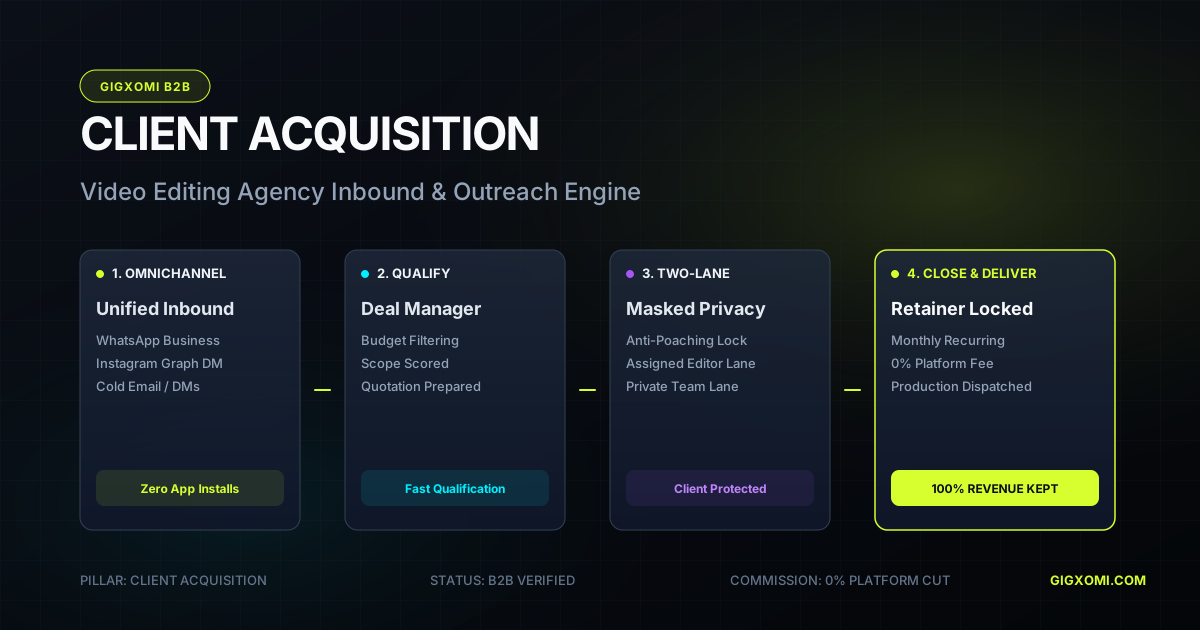
The Video Editing Agency Delivery Engine
How modern studios scale client capacity without founder micro-management or poaching risk:
Omnichannel Inbound
WhatsApp & Instagram DM leads arrive in Unified Inbox
Qualification & Quote
Manager scores scope, prices deal & sends quote link
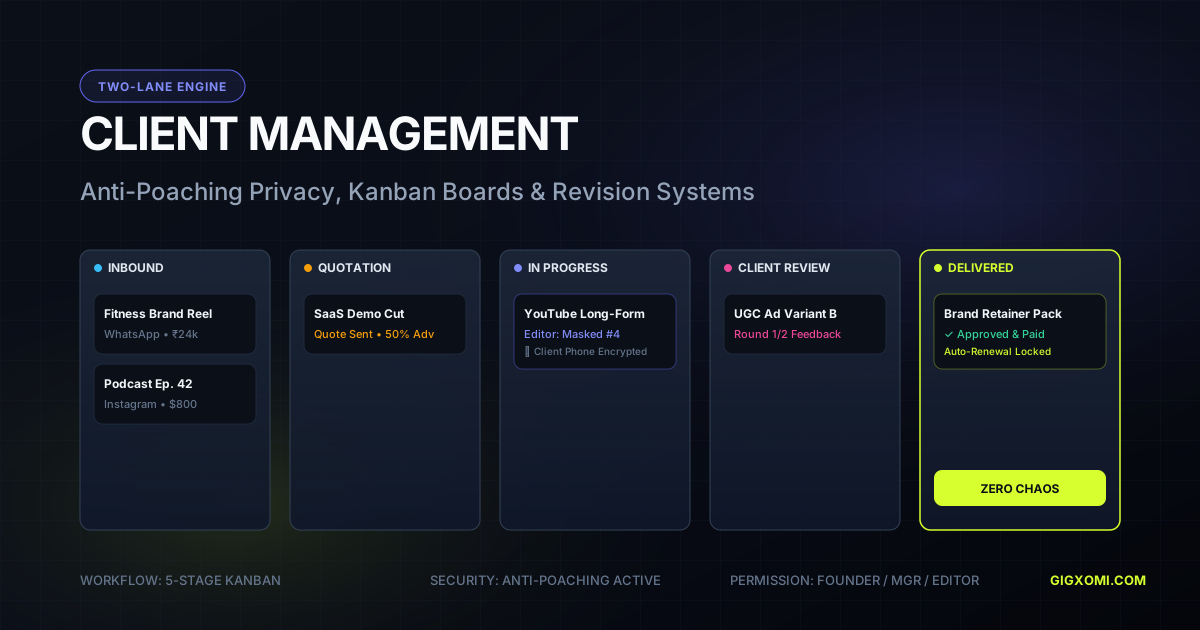
Two-Lane Masked Chat
Editor receives brief; client phone is 100% encrypted
Review & Approval
Client approves rough cut with gated revision limits
0% Commission Payout
Agency keeps 100% of fees; auto-renewal locked
Anti-Poaching Guarantee: Editors never see raw client phone numbers or direct payment links. All communication is relayed via encrypted tokens, protecting your agency's client equity permanently.
Put the Process Into Practice
Gigxomi helps video-editing agencies and studio owners keep client context, manager delegation, editor assignments, reviews, delivery, and payout visibility connected. Use this guide to structure your process; use the workspace when that process requires shared ownership and a reliable operating record.
You can also read our in-depth video editing agency management software guide, or review agency workspace pricing.
Continue Your Plan
Automate Client Delivery with Anti-Poaching Security
Turn your acquisition funnel into reliable delivery: Two-Lane masked chat prevents client poaching, 0% platform commission protects margins, and WhatsApp concierge (+91 99933 28124) accelerates team rollout.
Frequently Asked Questions
What stages should a video editor use?
Start with qualified, contacted, replied, discovery scheduled, proposal sent, paid pilot agreed, delivered, and recurring. Adjust only when another stage represents a real decision your team needs to manage.
How many prospects do I need?
Work backwards from capacity and your actual conversion rates. A useful number depends on the segment, source, offer, proof, price, and follow-up quality.
When should I use a CRM?
Use one when leads, follow-ups, client history, or handoffs are being lost. The right system should make the next action and delivery context clearer, not add data entry without decisions.
Related Guides
Explore more agency scaling blueprints, client acquisition systems, and software comparisons.
How to Get Video Editing Clients: A Repeatable System
Build a repeatable client pipeline by choosing a niche, creating relevant proof, finding businesses with visible video demand, and following up with a specific offer.
CRM for Video Editors: What to Track and Why
A useful CRM for video editors tracks relationships and revenue decisions—not just contacts—including source, fit, offer, next action, proposal, project history, and retention opportunity.
How to Manage Video Editing Clients Without Chaos
Manage editing clients with a visible lifecycle: qualification, scoped onboarding, asset intake, milestones, consolidated review, approval, delivery, payment, and retention.
How to Get Your First Video Editing Client
Get the first paid client by narrowing your offer, producing one relevant proof piece, contacting warm and well-researched prospects, and selling a small paid pilot.
How to Get Video Editing Clients as a Beginner
A beginner can compete through focus, reliable fundamentals, honest samples, fast communication, and a paid pilot that is small enough to deliver exceptionally well.
How to Get Video Editing Clients in India
Find Indian clients through niche communities, local business networks, creator ecosystems, production partners, and outreach that reflects regional language and payment realities.
How to Get International Video Editing Clients
Win international work by showing market-specific proof, reducing communication risk, handling time zones and payments professionally, and starting with a tightly scoped pilot.
How to Get Video Editing Clients on Instagram
Use Instagram as a prospecting database: specialize your profile, find accounts with an active publishing need, start relevant conversations, and move qualified leads into a paid pilot.