
In a Hurry? Key Takeaways
White-label editing can expand delivery capacity without immediate hiring, but only when client ownership, confidentiality, quality, revisions, and handoffs are agreed before the first file moves.
Define client ownership
Protect confidential material
Test a paid pilot
Agree revision and escalation rules
Scale Your Video Editing Agency With Zero Chaos
Manage freelance editors, streamline revisions, protect clients with two-lane masked messaging, and retain 100% of your earnings. No hidden fees, no marketplace middleman cuts.
Decide what the partner is actually responsible for
White-label can describe very different relationships: invisible production only, direct client communication under your brand, or a managed post-production pod. Write down who receives footage, who asks clarification questions, who presents drafts, who approves changes, and who owns the final client relationship. Ambiguity here creates more risk than editing style.
The partner should receive only the access required for delivery. Use project-specific folders, named users, expiration rules, and a documented process for removing access. If work involves unreleased campaigns, customer data, or regulated claims, address those requirements before sending a sample.
Run a representative paid pilot
Choose a pilot that resembles recurring work: normal source quality, brand assets, expected turnaround, and a realistic review round. A perfect hand-picked clip proves little about weekly delivery. Score the pilot on interpretation of the brief, first-cut quality, communication, version control, deadline reliability, and how the team handles a correction.
Share a written quality checklist and ask the partner to explain its own pre-delivery review. Look for a process that catches missing captions, unsafe crops, audio inconsistency, incorrect claims, broken links, and naming errors before the agency sees the file.
- Brief interpretation
- First-pass approval
- File and version discipline
- Response to corrections
- Confidentiality and access control
Protect margin and client trust as volume grows
Calculate margin after account management, briefing, internal review, revisions, storage, and payment costs—not only the partner invoice. A low editing rate can become expensive when your team must rewrite every brief or rebuild every delivery. Agree how rush work, extra variants, source problems, and out-of-scope revisions are priced.
Start with a capacity band rather than an unlimited promise. Review delivery quality and actual management time each month. Expand volume only when the partner maintains first-pass approval and deadline reliability. White-label works best as an accountable operating relationship, not an anonymous file handoff.
What To Check Before You Decide
- Define client ownership
- Protect confidential material
- Test a paid pilot
- Agree revision and escalation rules
- Model margin after management time
Comparison Table
| Option | Best for | Tradeoff | Gigxomi angle |
|---|---|---|---|
| Freelance partner | Flexible specialist capacity | Continuity depends on one person | Preserve briefs and delivery history across assignments |
| White-label team | Recurring multi-skill volume | Needs strong ownership and QA rules | Track capacity, review, and client boundaries |
| In-house hire | Stable long-term demand and close collaboration | Fixed cost and slower capacity changes | Compare utilization before committing |
Action Steps for white label video editing for agencies
- Define the white-label operating model.
- Sign confidentiality and client-ownership terms.
- Run a representative paid pilot.
- Measure full delivery cost and first-pass approval.
- Expand through agreed capacity bands.
The Video Editing Agency Delivery Engine
How modern studios scale client capacity without founder micro-management or poaching risk:
Omnichannel Inbound
WhatsApp & Instagram DM leads arrive in Unified Inbox
Qualification & Quote
Manager scores scope, prices deal & sends quote link
Two-Lane Masked Chat
Editor receives brief; client phone is 100% encrypted
Review & Approval
Client approves rough cut with gated revision limits
0% Commission Payout
Agency keeps 100% of fees; auto-renewal locked
Anti-Poaching Guarantee: Editors never see raw client phone numbers or direct payment links. All communication is relayed via encrypted tokens, protecting your agency's client equity permanently.
Put the Process Into Practice
Gigxomi helps video-editing agencies and studio owners keep client context, manager delegation, editor assignments, reviews, delivery, and payout visibility connected. Use this guide to structure your process; use the workspace when that process requires shared ownership and a reliable operating record.
You can also read our in-depth video editing agency management software guide, or review agency workspace pricing.
Continue Your Plan
Start Free with Google
Build a protected white-label editing workflow, manage editor teams, and scale client capacity on Gigxomi.
Frequently Asked Questions
Will clients know the editing is outsourced?
That depends on your agreement and disclosure obligations. Never misrepresent regulated, contractual, or material facts. Define communication, branding, confidentiality, and client ownership in writing.
How should an agency test a white-label editor?
Use a paid pilot that reflects normal footage, brand rules, turnaround, and revisions. Score the complete workflow, not only the visual quality of one finished clip.
How much margin should an agency keep?
There is no universal percentage. Model the full cost of sales, briefing, management, review, revisions, storage, payments, and risk, then price for sustainable service and client outcomes.
Related Guides
Explore more agency scaling blueprints, client acquisition systems, and software comparisons.
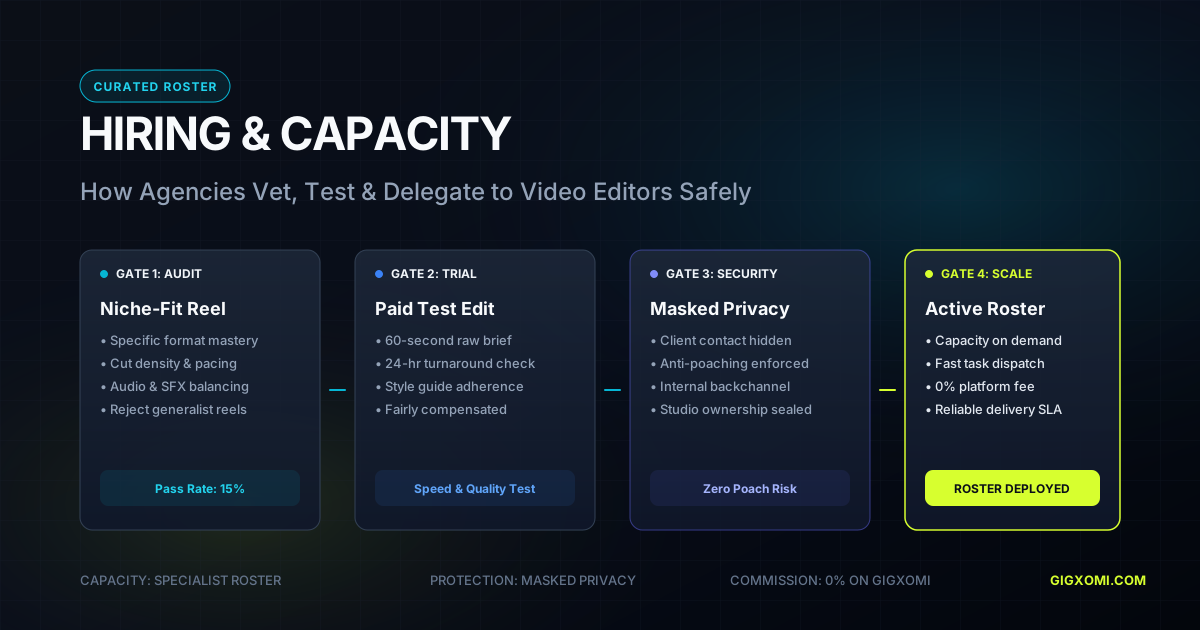
How to Outsource Video Editing Without Losing Quality
Outsource editing by standardizing the brief, choosing the correct delivery model, running a paid test, controlling files and feedback, and measuring quality and margin.
How to Hire Video Editors: A Practical Hiring Scorecard
Hire editors by defining the real role, sourcing format-matched candidates, using a fair paid work sample, checking operating fit, and onboarding against measurable quality standards.
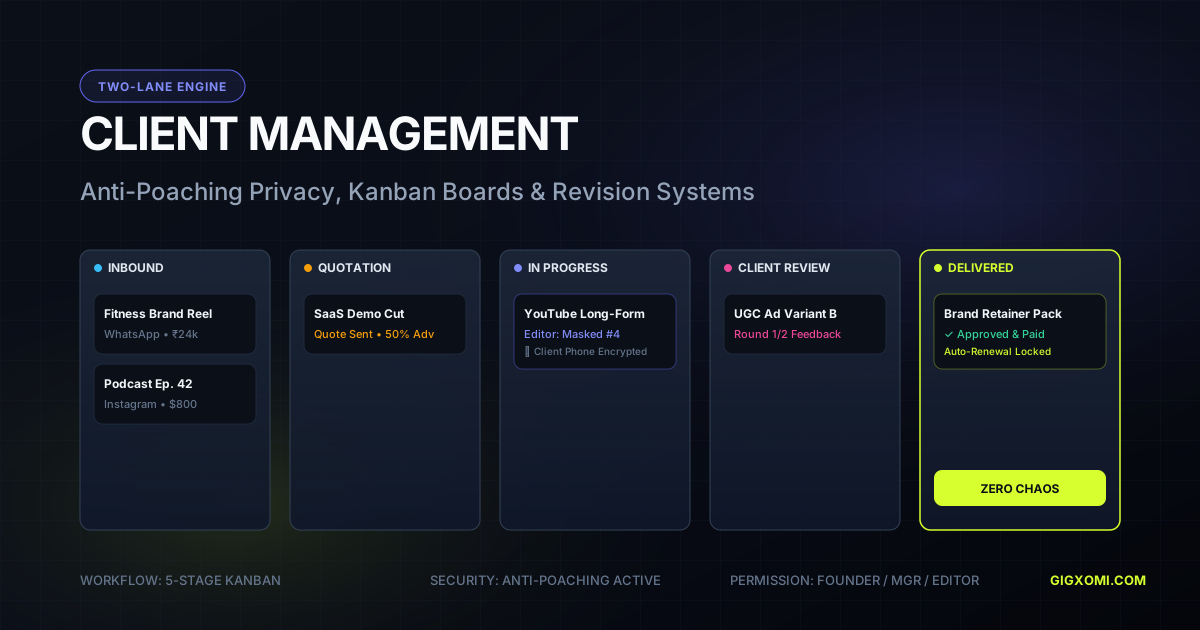
Video Editing Agency Management Software & Systems: How to Build Your Team and Manage Editors
The comprehensive blueprint for lead video editors scaling into an agency: how to manage freelance editors, structure two-lane masked communication, build a vetted team, stop client poaching, and maintain 60%+ profit margins.
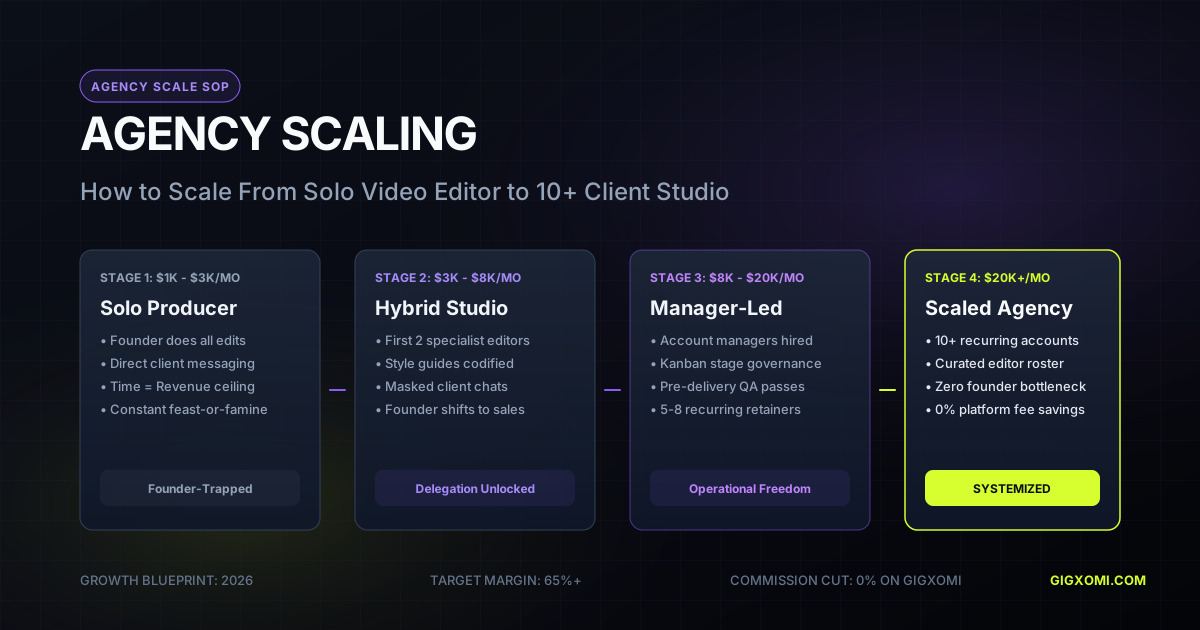
How to Scale a Video Editing Business Profitably
Scale an editing business by choosing the current constraint, protecting contribution margin and quality, building repeatable acquisition and delivery, and adding the right capacity at the right time.
Short-Form Video Editing Agency Workflow for Reels and Shorts
Scaling short-form editing requires a repeatable idea-to-approval system, not just faster cuts. Standardize inputs while leaving room for platform-native creative judgment.
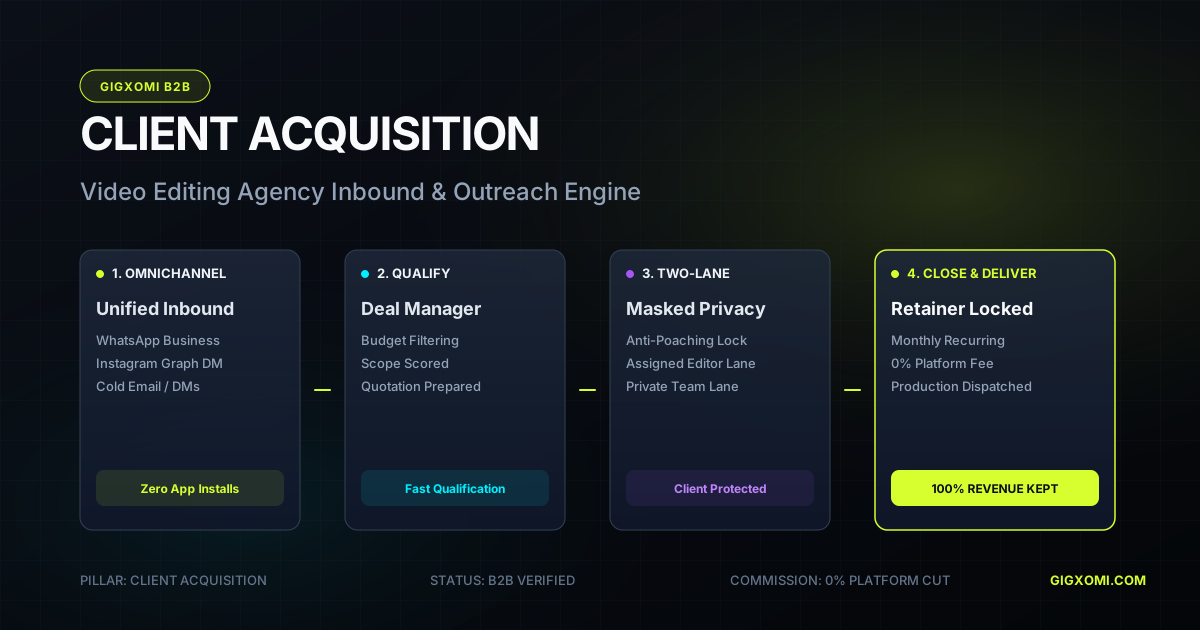
How to Get Video Editing Clients: A Repeatable System
Build a repeatable client pipeline by choosing a niche, creating relevant proof, finding businesses with visible video demand, and following up with a specific offer.
How to Get Your First Video Editing Client
Get the first paid client by narrowing your offer, producing one relevant proof piece, contacting warm and well-researched prospects, and selling a small paid pilot.
How to Get Video Editing Clients as a Beginner
A beginner can compete through focus, reliable fundamentals, honest samples, fast communication, and a paid pilot that is small enough to deliver exceptionally well.