In a Hurry? Key Takeaways
A reliable deadline begins with footage volume, edit complexity, review ownership, revision limits, and delivery format—not with a universal number of days.
Separate production time from client review time
Estimate from footage and deliverables
Name one approval owner
Limit revision rounds
Scale Your Video Editing Agency With Zero Chaos
Manage freelance editors, streamline revisions, protect clients with two-lane masked messaging, and retain 100% of your earnings. No hidden fees, no marketplace middleman cuts.
Start with the work units that drive the schedule
Turnaround varies because a five-minute talking-head edit and a five-minute brand film do not contain the same work. Estimate ingest and organization, story selection, first-cut assembly, graphics, sound, color, captions, quality control, exports, and delivery variants separately. Raw-footage duration matters, but the number of cameras, weak audio, missing selects, and unclear direction often matter more.
Define two clocks in the agreement: editor production time and client review time. If the client takes three days to review a first cut, that delay should move the final date unless a separate rush plan is agreed. This prevents the editor from absorbing delays created outside production.
Use ranges for common project types
A well-briefed short social edit may take one to three working days; a batch of variants needs additional time for captions, reframing, and platform exports. A straightforward YouTube episode often needs three to seven working days. Multi-camera podcasts, course modules, advertisements, event films, and motion-heavy explainers require a scoped estimate after the footage and references are inspected.
These ranges are planning anchors, not promises. Complexity multipliers include heavy motion graphics, poor audio, multilingual captions, missing brand assets, multiple reviewers, regulated claims, and an unusually large number of deliverables. Make those multipliers visible before the client approves the schedule.
- Simple short-form: commonly 1–3 working days
- Standard YouTube episode: commonly 3–7 working days
- Complex campaigns: scope after footage review
- Rush delivery: reduce scope or add capacity
Protect the deadline with an approval system
Set a first-cut date, a review deadline, the number of included revision rounds, and a final-delivery date. Ask the client to consolidate feedback through one decision owner. Timestamped comments are helpful, but they do not replace a clear statement of which requests are approved and which are optional.
Track planned hours against actual hours after delivery. When the same project type repeatedly exceeds its estimate, change the template rather than asking the team to work faster. A dependable turnaround is a capacity and communication system, not a heroic last-minute effort.
What To Check Before You Decide
- Separate production time from client review time
- Estimate from footage and deliverables
- Name one approval owner
- Limit revision rounds
- Add risk buffers before promising the date
Comparison Table
| Option | Best for | Tradeoff | Gigxomi angle |
|---|---|---|---|
| Fixed deadline | Repeated work with stable inputs | Breaks when footage or scope changes | Use recurring briefs and visible change history |
| Scoped range | New or complex projects | Needs an early footage review | Record assumptions before assignment |
| Rush delivery | Time-critical, reduced-scope work | Higher cost or additional editors | Check capacity before accepting the promise |
Action Steps for video editing turnaround time
- Inspect all footage and deliverables.
- Estimate each production stage.
- Add client review windows and a risk buffer.
- Confirm one feedback owner and revision limit.
- Compare planned and actual time after delivery.
The Video Editing Agency Delivery Engine
How modern studios scale client capacity without founder micro-management or poaching risk:
Omnichannel Inbound
WhatsApp & Instagram DM leads arrive in Unified Inbox
Qualification & Quote
Manager scores scope, prices deal & sends quote link
Two-Lane Masked Chat
Editor receives brief; client phone is 100% encrypted
Review & Approval
Client approves rough cut with gated revision limits
0% Commission Payout
Agency keeps 100% of fees; auto-renewal locked
Anti-Poaching Guarantee: Editors never see raw client phone numbers or direct payment links. All communication is relayed via encrypted tokens, protecting your agency's client equity permanently.
Put the Process Into Practice
Gigxomi helps video-editing agencies and studio owners keep client context, manager delegation, editor assignments, reviews, delivery, and payout visibility connected. Use this guide to structure your process; use the workspace when that process requires shared ownership and a reliable operating record.
You can also read our in-depth video editing agency management software guide, or review agency workspace pricing.
Continue Your Plan
Start Free with Google
Deploy reliable delivery workflows, manage revisions cleanly, and keep client deadlines credible on Gigxomi.
Frequently Asked Questions
How long should a video edit take?
Simple short-form work may take one to three working days, while a standard YouTube episode may take three to seven. Inspect footage, complexity, graphics, review time, and variants before committing.
Do client feedback days count in turnaround?
State this explicitly. A fair schedule separates production days from client review days and moves the final date when feedback arrives after the agreed review window.
How should rush editing be handled?
Confirm available capacity, reduce optional scope, set a firm feedback window, and charge for the disruption or added resources. Do not promise normal scope in an unrealistic window.
Related Guides
Explore more agency scaling blueprints, client acquisition systems, and software comparisons.
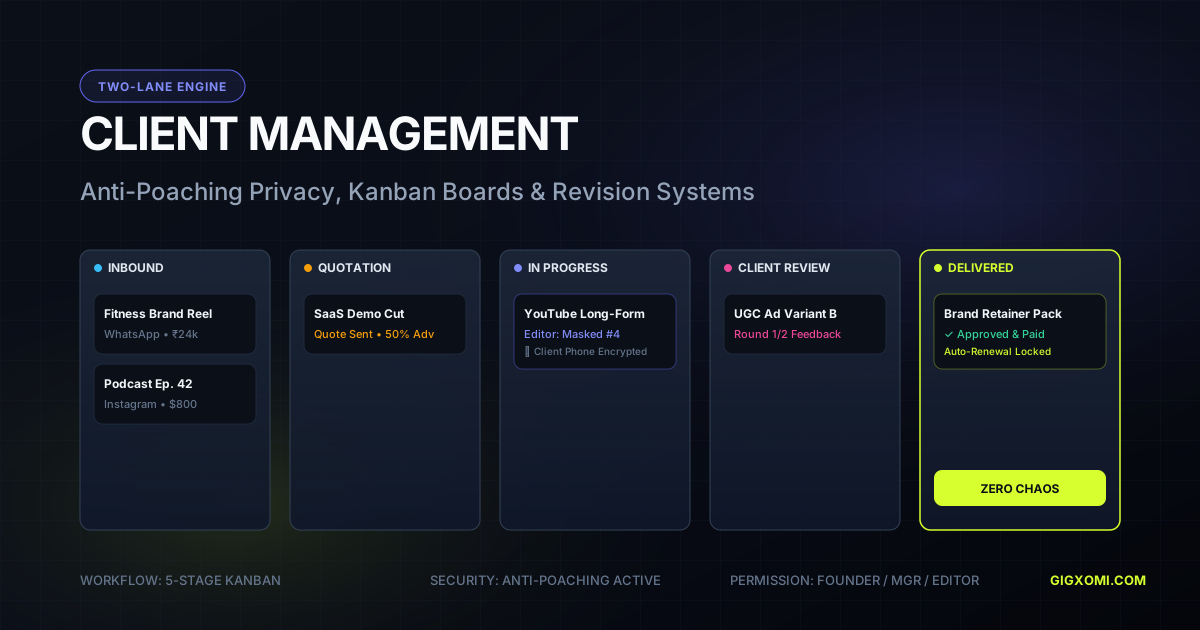
How to Manage Video Editing Clients Without Chaos
Manage editing clients with a visible lifecycle: qualification, scoped onboarding, asset intake, milestones, consolidated review, approval, delivery, payment, and retention.

Video Editing Proposal Template: Scope Work Clearly
A strong video-editing proposal connects the client’s goal to exact deliverables, workflow, schedule, review limits, price, rights, and acceptance terms.
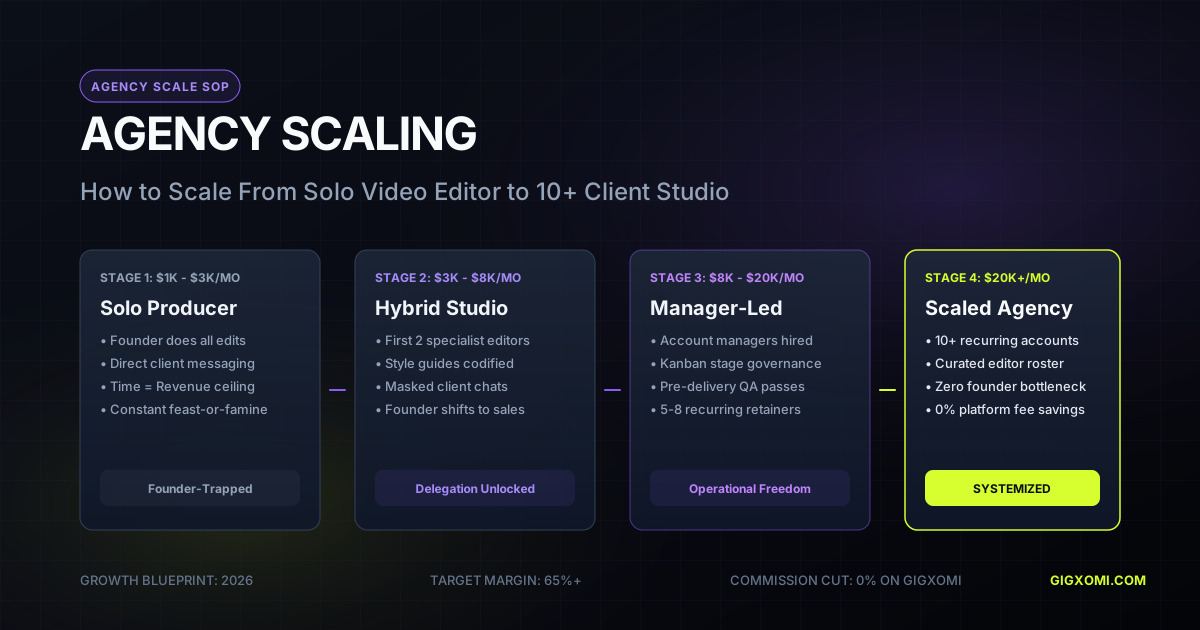
How to Scale a Video Editing Business Profitably
Scale an editing business by choosing the current constraint, protecting contribution margin and quality, building repeatable acquisition and delivery, and adding the right capacity at the right time.
CRM for Video Editors: What to Track and Why
A useful CRM for video editors tracks relationships and revenue decisions—not just contacts—including source, fit, offer, next action, proposal, project history, and retention opportunity.
Video Editing Client Onboarding Checklist: The 72-Hour Agency Workflow
Onboarding sets the operational cadence for video editing retainers. Standardize your 72-hour agency intake: automate brand asset collection, lock creative briefs, establish cloud storage structures, and confirm turnaround SLAs.
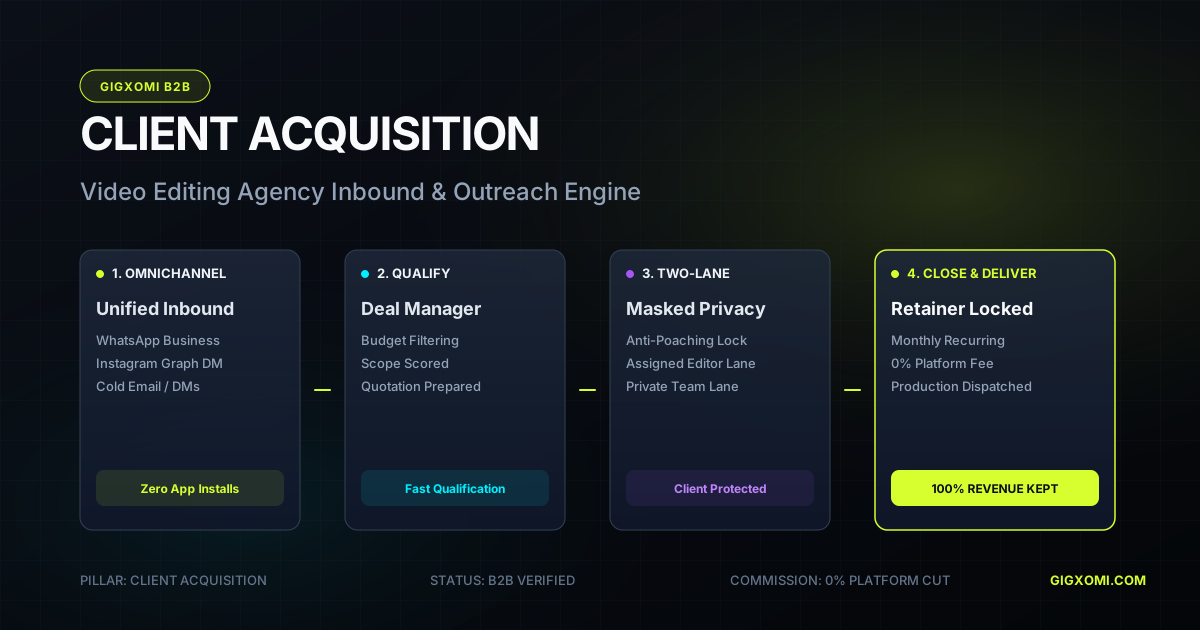
How to Get Video Editing Clients: A Repeatable System
Build a repeatable client pipeline by choosing a niche, creating relevant proof, finding businesses with visible video demand, and following up with a specific offer.
How to Get Your First Video Editing Client
Get the first paid client by narrowing your offer, producing one relevant proof piece, contacting warm and well-researched prospects, and selling a small paid pilot.
How to Get Video Editing Clients as a Beginner
A beginner can compete through focus, reliable fundamentals, honest samples, fast communication, and a paid pilot that is small enough to deliver exceptionally well.